What happens when you hand young people the right tools
As Founding VP of Marketing & Community, I helped run the first-ever vibe-coding healthcare hackathon for high schoolers. Here's what building the community around it taught me.
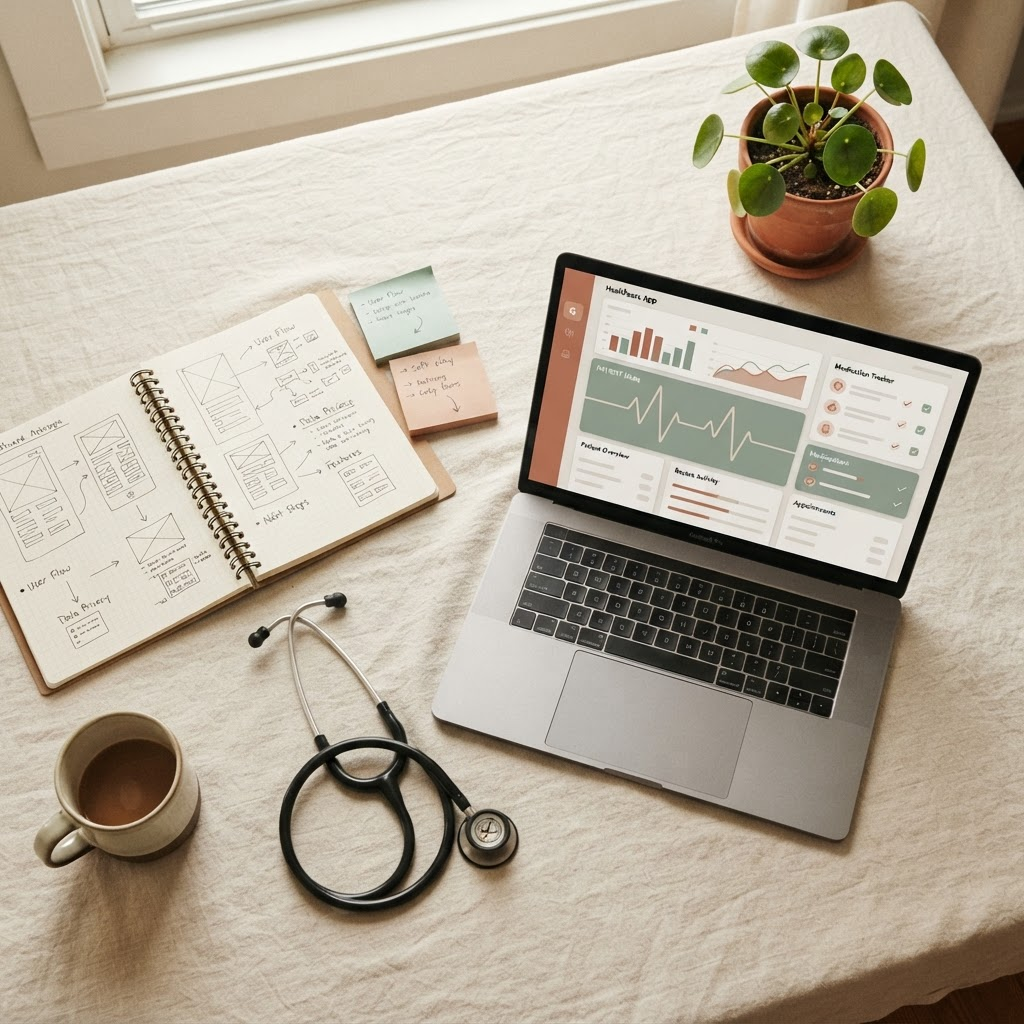
This summer I served as Founding VP of Marketing & Community for the MediMate Foundation Healthcare Innovation Hackathon 2026 — the first-ever vibe-coding hackathon built specifically for high school students in healthcare. Alongside founder Deepti Bahel and Ayushi Ajay Walia, I helped bring together a global cohort of student builders, mentors, clinicians, and patient advocates, and I had the privilege of helping host Demo Day.
My role wasn't to write the code. It was to build the room the code could happen in — the outreach, the messaging, the partnerships, and the community that made students feel their ideas would be taken seriously.
The scope
Students joined from around the world — the USA, Canada, Egypt, and more. Teams spent a week building on Base44, with mentors beside them at every step, then presented live to a panel of judges drawn from healthcare and technology. The projects tackled real problems: hormone and thyroid health, chronic kidney disease, teen mental health, nutrition, caregiving, and patient education.
Demo Day was scheduled for two hours. It ran for three, because none of the judges wanted to stop asking questions. One of the builders who presented was a thirteen-year-old seventh grader. That single fact tells you everything about what's possible when you hand young people the right tools and then get out of their way.
What I actually did
Marketing and community for something like this is less about promotion and more about trust. I worked on the outreach that brought contributors and mentors in, the messaging that framed the event as serious rather than a novelty, and the partnerships that gave students real support — from Base44 for building, to the Improving Renal Outcomes Collaborative (IROC) and the WomenTech Network for reach and reinforcement. The goal throughout was simple: make a space where teenagers with real ideas could be heard.
The projects that stayed with me
AYURA, an AI-powered nutrition platform, was built by a student who has lived with nephrotic syndrome for over fifteen years — it connects a patient's health profile with trusted nutrition guidance and everyday food decisions. ThyroWings (thyro-wings.base44.app) came from a team supporting people living with Hashimoto's thyroiditis, complete with a "Butterfly Garden" that grows as you log your health. RenalRoute took on kidney care. You can explore the full slate of student submissions at medimate-hack-impact.base44.app.
What the judges saw
The most striking part wasn't the technology. It was how the professionals in the room reacted to what these students built.
We talk about this generation like they're lost… I judged a hackathon today. High schoolers mostly. One team was entirely 7th grade. This generation is not lost. They are building. And they are building for us.
— Sonia Chawdhary, judge, building at the intersection of AI and health tech
What impressed me most wasn't simply that they used AI or learned a new platform. It was their imagination, empathy, and ability to turn meaningful problems into functional healthcare prototypes.
— Tamara Miller-Villanueva, AI strategist and engineering executive
Watching high school students identify real problems, build solutions, accept feedback, and confidently present their ideas reminded me why creating opportunities like this matters.
— Christina Cole, founder & CEO, Phoenix Health Compass
Why it mattered to me
I care about work that reaches beyond itself. This hackathon was exactly that — dozens of young people using technology in service of patients and caregivers they'd never met, guided by adults who chose to take them seriously. Building the community around it taught me that the most valuable thing you can offer a young innovator isn't a prize. It's the belief that their ideas are worth building, and an audience willing to listen.
That's the kind of change I want to keep making: creative, entrepreneurial, and pointed squarely at the good of the community.